Saltford CofE Primary School Ascension Day out pix

This slideshow requires JavaScript.

Here are pictures from Saltford CofE Primary School Ascension Day walk and school assembly outing up Kelston Roundhill earlier this year. We’ll try to do our part to keep the tradition going; we’ll keep the permissive paths open, tidy up one or two dangerous trees and stay in touch. Thanks to Neil Baker for the photos.

Posted in Uncategorized | Leave a comment

Official advice on ash dieback

Ash dieback is an unhappy prospect for all of us. There are few enough mature trees on Kelston Roundhill as it is, and ash is the one that works best. The trees we just planted included a load of ash. So what do we do about the risk?

Sounds like there are no preventive measures yet. Current advice is keep vigilant and report if we spot it. Small trees would die in the same year; larger ones struggle on for a few years. So the policy is any infected tree gets burned of buried deep. Resources:  Woodland Trust page on Chalara fraxinea (ash die-back), Forestry Commission page 

Update: The Guardian reports

A new website, ashtag.org, and a smartphone app, will be launched on Monday to encourage the public to report trees showing symptoms.

Forestry Commission leaflet (pdf)

Posted in Uncategorized | Leave a comment

Kelston PCC meeting tonight

Shortly off to my first ever Parish Council meeting at Kelston this evening. No idea if usual attendance is two people, 20 or more. Agenda looks like introductions, then discuss general Kelston Roundhill aims and policies. We’d cover

  1. viable farming (incl tenancy, OELS, HLS)
  2. greater natural diversity (trees, hedgerows, wildflowers, Avon Wildlife work, bats)
  3. sensitive amenity use of permissive paths, old barn planning, historic & archaeological aspects

Looking forward to it. Happy to receive comments below.

Posted in Uncategorized | Leave a comment

Sobering wildlife report from Plantlife

Sobering report from the wildlower charity Plantlife called Our Vanishing Flora
charts 10 national extinctions and a far higher rate of county wide extinctions (source:  The Indy). Warwickshire for example lost 78 species in 60 years, and of Shakespeare’s lines in A Midsummer Night’s Dream

I know a bank where the wild thyme blows,

Where oxlips and the nodding violet grows,

Quite over-canopied with luscious woodbine,

With sweet musk-roses and with eglantine…

the report says: “The chance of finding all these plants on the same bank anywhere in the Midlands today is slight. In Warwickshire, there is no chance at all.” Move over MAFF, NFU and Monsanto; we need to do better than that.

Posted in Uncategorized | 1 Comment

Kelston Roundhill and 7000 years of Cotswold Enterprise: BRLSI talk about a walk

This looks interesting:

Anyone up for this? It’s conveniently timed for workers at 1930 midweek, tho I’m a bit surprised its light enough long enough for a six mile walk & talk. And latish for kids. Still, we shall entrust ourselves to the organisers…
CLARIFICATION: It’s a talk not a walk (despite description above). Just show up and pay on the door. See you there!

Posted in Education & Schools | Leave a comment

Results of Avon Wildlife Trust survey

Most of the fields on Kelston Roundhill are recently resown with a ryegrass and clover mix. This is good in that it allows organic grazing of cattle, and supports financially sustainable farming. It’s less good from a species diversity point of view, specifically wildflowers and grasses. This land is what wildlife people call “improved” (ie bad). But some of the fields are “semi-improved” (ie less bad), and one in particular – Roundhill field – is not much improved at all, ie quite good with a decent diversity of species.

Avon Wildlife Trust has just completed a species audit in four of the fields. In Roundhill itself, which is now left ungrazed April-August, they found 17 species of wildflower, 10 of grasses, and 35 other species (including various buttercups which evidently don’t qualify as wildflowers. Must ask). Full details below (pdf).

The recommendation is to “maintain” Roundhill – which they found quite interesting – and to restore the three other fields which are quite promising. (In wildlife vocab “restore” seems to mean undo damage done by “improvement”.) Here begins a great learning curve.

Thanks to Ellie Higginson and the Avon Wildlife team.

Btw if any local wildlife photographer wants to collaborate on recording progress we’d be pleased to hear from them.

Survey results Roundhill Farm 282

Posted in Uncategorized | Leave a comment

“No pyrotechnics of any kind…”

So what’s a landowner to do if Army cadets request to undertake an exercise on the farm? Kelston Roundhill is pretty much a demilitarised zone and we’re pretty much hardcore pacifists. But young people need training, signals is a noble skill and the request was timely, courteous and reasonable.

Our managing agents drafted an excellent and constructive policy to cover the obvious risks and eventualities – see below. Other landowners faced with similar requests are welcome to cut and paste. Continue reading

Posted in Uncategorized | Leave a comment

Saltford CofE primary school show up for their annual Ascension Day visit

Here’s a nice surprise during our ecologists visit today: out of the blue what seemed like the entire local primary school swarmed up the hill. While Duncan from Emorsgate, Eleanor from Avon Wildlife and our Friend the visiting UCL ecology professor David were enlightening Alex George Clare Aliya and me about vetchling, horny ragwort, saliburnette and common spotted orchids (all munched by sheep) I’d guess we had 60-80 years 3-5 letting rip with lunchtime games and frolics (all most responsibly supervised of course).

Neil from Saltford CoFE Primary School tells me they do it every year on Ascension Day. OK ok, it means we need to make the trees safe, fence off the Clump during replanting etc. But what a lovely tradition, bringing a magic extra touch to a really valuable day.

Posted in Education & Schools | Leave a comment

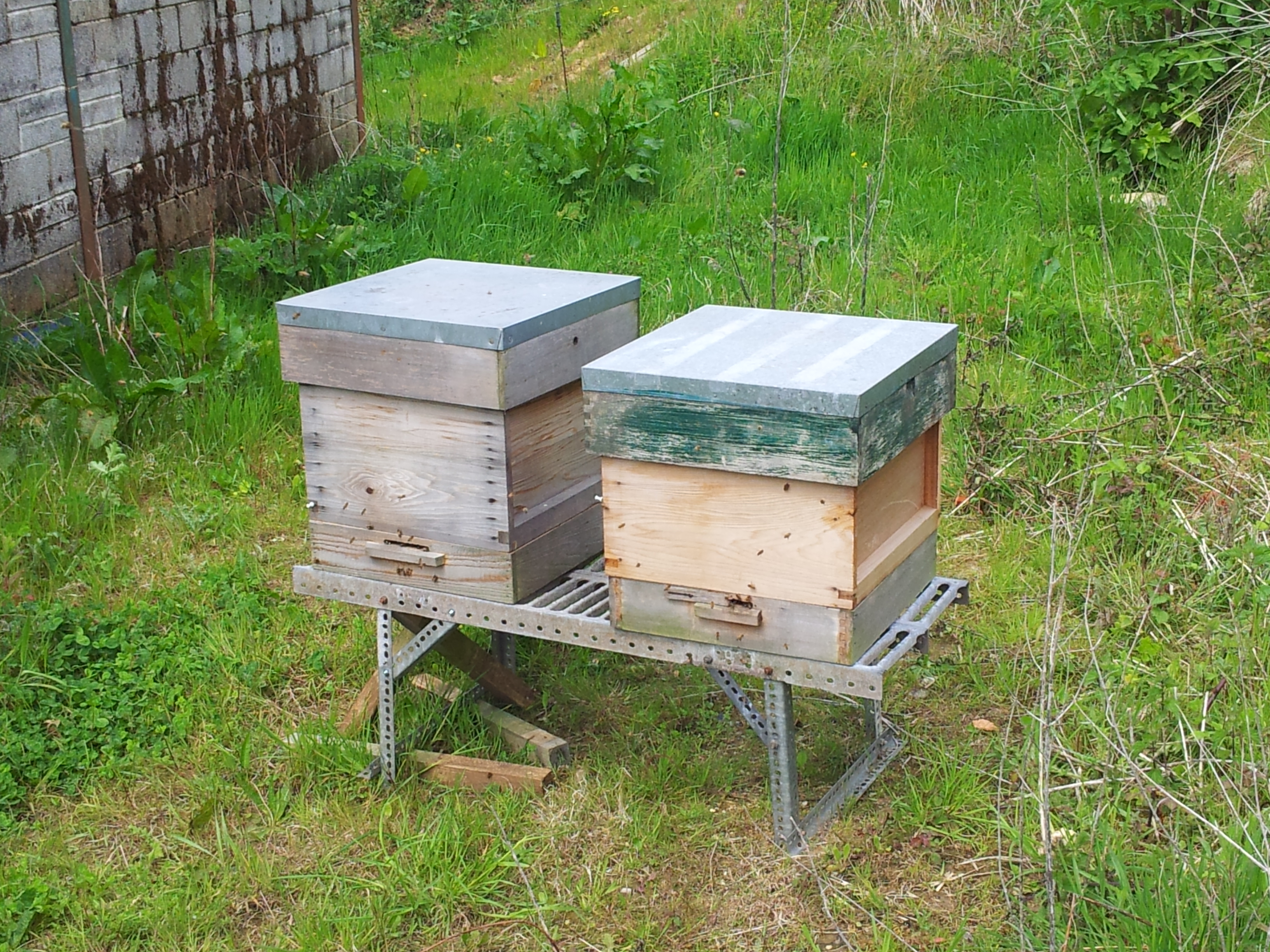
Welcome to the new bees

The ecological engine room has been restored at Kelston Roundhill. We’ve accommodated bees there for 18 months but after the winter one colony died out and the other was queenless and weak. Worse still, the unfortunate beekeeper had developed an allergy to bee stings and “decided to hang up his smokers” (as a fellow apiarist put it).

Happy to report that the local beekeeping scene is quite lively and we’re now accommodating two new colonies. They looked pretty busy today. Looking forward to sampling the next batch of honey, packed with local antihistamines.

Posted in Uncategorized | 1 Comment

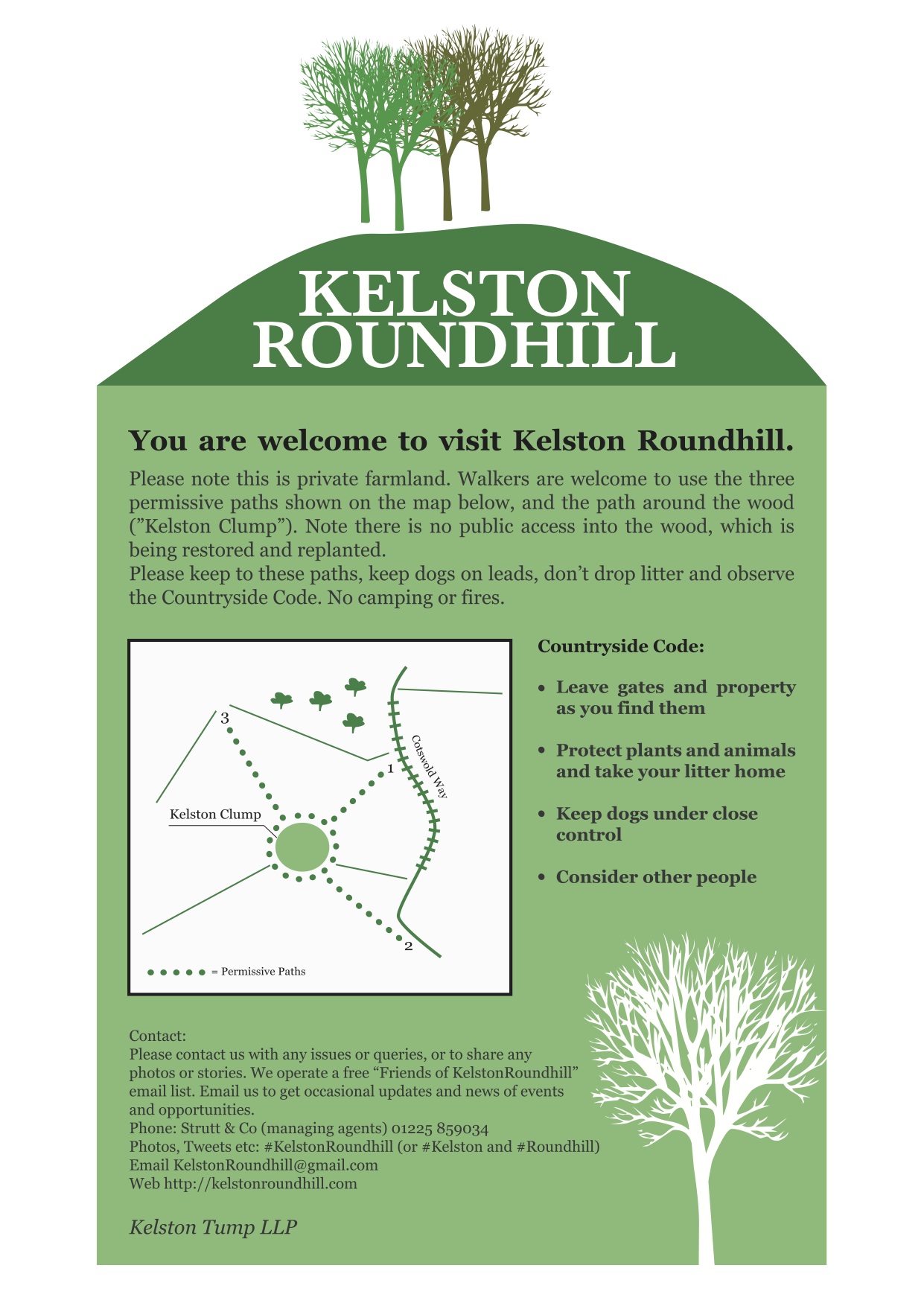
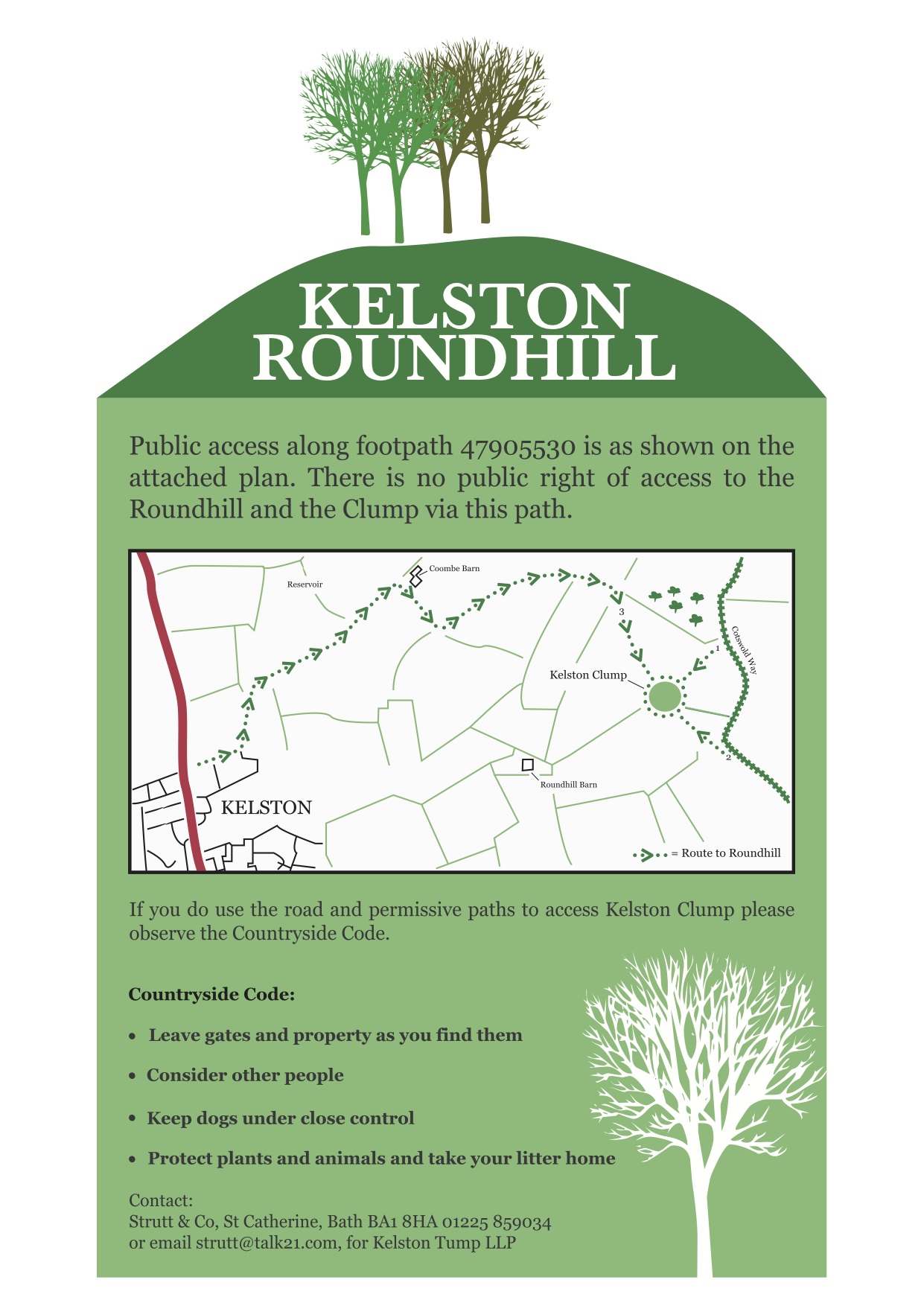
New signs for Roundhill Farm

Roundhill Farm needs new signs to show the permissive paths and to combine a message of “welcome” to walkers who want to divert from the Cotswold Way to enjoy the view and “please desist” to those whose behaviour causes problems for others.

The issues are the odd uncontrolled dog, camping or fire (eg inside living trees), and just litter. Anyone would forgive Radiohead for doing a dawn-raid video on site (cheers for that, and hurrah for your enlightened approach to releasing online music). Who knows what to make of the bikers who turned up with a 30′ radio transmitting mast last week; no idea what they were broadcasting but they moved on cheerfully enough when asked.

Natural England’s  countryside code pretty much covers the do’s and don’ts, but not everyone is aware of the code or abides by it.

There’s also the oddity on this farm of a proper scheduled right of way which goes a third of the way into one field (Barrow’s Style) and then just stops as a dead end. This used to make sense when the field was a landfill site, but may puzzle some walkers today.

Anyway, I hope they’re clear, and have something close to the desired effect. Thanks to Alice and Kim for the design work.

Posted in Uncategorized | 6 Comments