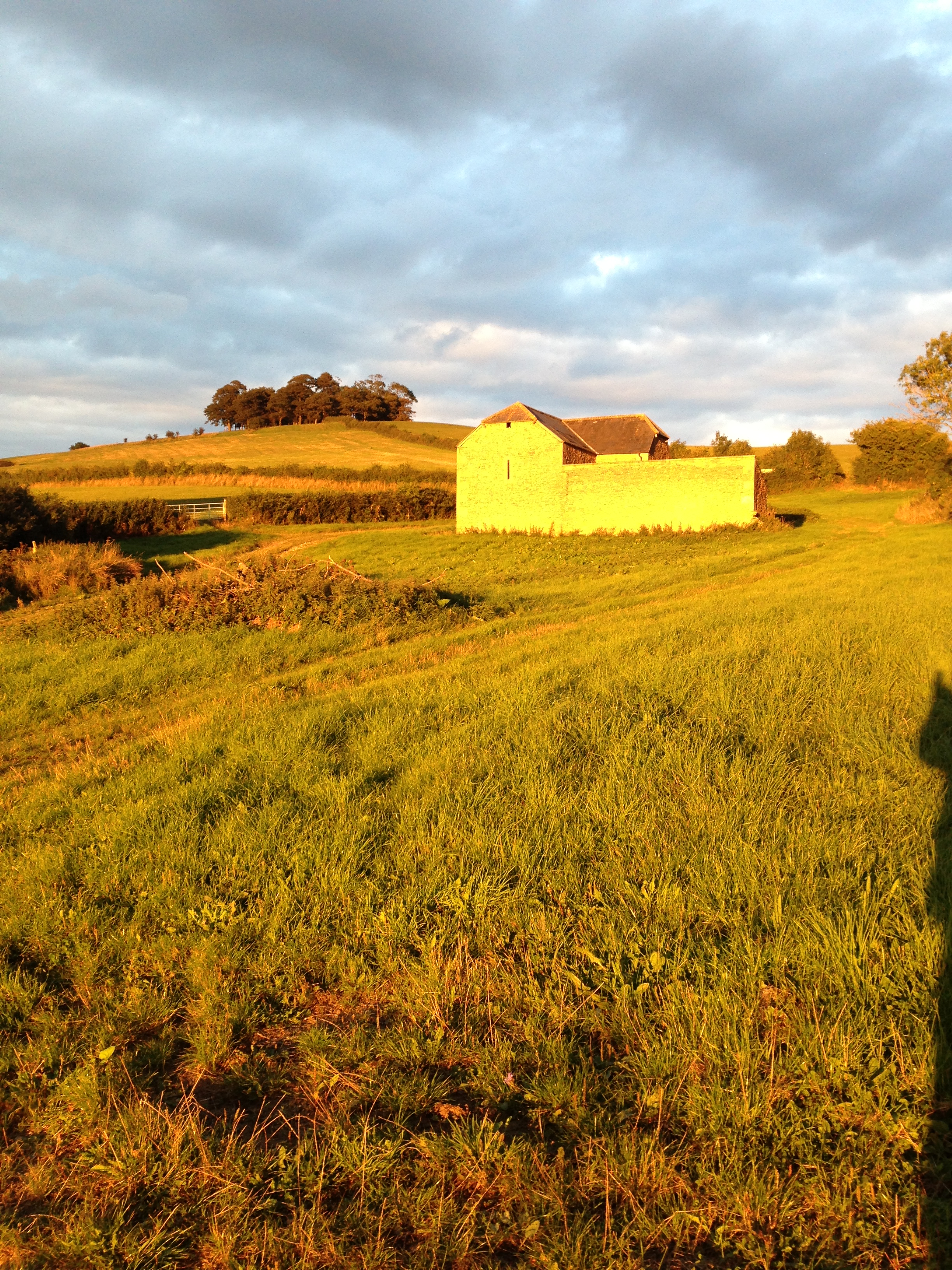
Bath from Kelston Roundhill by Scott Salter
Via Twitter from @ScottRSalter HT @ekaterinalondon
Bath from Kelston Roundhill by Scott Salter
Via Twitter from @ScottRSalter HT @ekaterinalondon
Matt Prosser has been consulting his Photographer’s Ephemeris again. Plus he has a new blog – check it out. He writes:
Photos of the Moon over Kelston Roundhill are so last year, don’t you think? This year how about a photo of a 90% partial eclipse of the sun over the clump?
This Friday, 20th March 2015 at 08:29 there will be a partial eclipse of the sun. The sky will go dark (and birds will fall silent, maybe).
I’ve worked out that the place to be is on the footpath off North Stoke Lane. (This is where I will be)
See the photographer’s Ephemeris at http://app.photoephemeris.com/?ll=51.413988,-2.433046¢er=51.4126,-2.4294&dt=20150320092800%2B0000&z=14&spn=0.03,0.07 for details.
For more information about the eclipse in the Bristol Area, including a neat animation of what to expect, see the following link: http://www.timeanddate.com/eclipse/in/uk/bristol
For safety here is some advice on how to protect your eyes when viewing the eclipse. http://www.timeanddate.com/eclipse/make-pinhole-projector.html
The fun starts at 08:23 and ends at 10:38 with maximum at 09:29
The weather at this range is sunny with cloud so let’s hope for a clear morning.
So does this mean smoked lenses I ask naively?
Yes, though the technical term for a smoked lens is a 10 f:stop Neutral Density Filter.
The sun will be quite high in the sky even though it is early morning so a portrait mode will be required. A single exposure would result in a silhouette of the hill so I’ll also take multiple exposures and blend them for best effect.
See you there eclipse hunters! I’ll try and do a better job of being in the right place at the right time than last year.
Not everyone loves the National Trust. Critics use words like formulaic or municipal. At their angriest they call it Nazional. But it has saved and preserved a colossal amount of national heritage, learned a huge amount about how to look after it, and it’s a huge source of expertise, resource and rallying point of love of British buildings and natural environment.
The point made by its more thoughtful detractors is that it can overlook or even compromise the spirit of the places it looks after. It is, after all, a pragmatic and secular bureaucracy. But the NT are smart and dedicated people, and they’re more than aware of that issue. See for example here the new National Trust campaign on the Bath Skyline:

“We are trying to put into words the spirit of the place”.
Kelston Roundhill, while indpendently owned, is an integral part of the same Bath skyline. We feel exactly the same need. Songwriters and poets have done some it already, and also photographers and artists. But, as our local sage Martin Palmer points out, there is something uniquely important about words.
So do reply to their enquiry. The exam question is “What one thing do you think makes the Skyline unique?” I think it’s fine to have more than one. My first thoughts are: 1. the Peter Gabriel’s song Solsbury Hill; 2. being able to see from Wilts to Wales #KelstonRoundhill; 3. the people you meet on the Skyline: the things that bring them there and the feelings they speak of.
It’s not a remote place; it’s sociable. There’s something about a historic, populous distant view that makes people open up their thoughts and feelings.
This is pretty cool: a team including Michael Pocock from CES in Oxfordshire has mapped and visualised species interactions, based on data from Norwood Farm in Somerset.
See the publication in Science

Species’ interaction networks at Norwood Farm, Somerset, UK. The entire network of networks is shown at top left (in which each circle represents one species), and quantitative visualizations are shown for each of the seven quantified individual networks (in which each block is a species, and the width of blocks of each color represents relative abundance). Details of the networks are given in table S1 and (14). Dark green and light green circles and blocks indicate noncrop and crop plants, respectively, whereas other colors indicate animal groups. Scale bars indicate the abundance of animal taxa. Plants are scaled in proportion to their interactions.
From: The Robustness and Restoration of a Network of Ecological Networks by Michael J. O. Pocock, Darren M. Evans, Jane Memmott
The Bath Soft Cheese company just had its Bath Blue named best cheese in the world – supreme champion – at the 2014 World Cheese Awards – story here. It’s an astonishing achievement, judged by an international panel against 2600 other cheeses from round the world.

Bath Blue: officially the best cheese in the world
We like to claim the cheese is nourished by Kelston Roundhill and there’s some truth in that because the Padfield’s organic cows graze the lower slopes. In reality rather more of the grazing is done on their own farm next door which is fertile low-lying pasture and more than twice the size. And of course in renting the Kelston Roundhill land to expand their successful business they do all the hard work of farming and maintenance to make the most of its modest productive value.
So we can’t really take any of the credit for this jaw-dropping achievement. But we could not be more chuffed for Graham, Hugh and the whole team. Congratulations!
This is insane. You can now fly from Bath to Kelston in the visual idiom of the online building game that every child and gamer is currently obsessed with. Leigh Dodds has created in Minecraft this visualisation based on Ordnance Survey digital map data. If I’ve got my bearings right the Roundhill is in our sights at 1:17.
Last month Leigh (see his blog DataSulis) won a BathHacked award for his pollutant levels visualisation (I missed that event; I couldn’t even manage to get the date right, let alone the data).
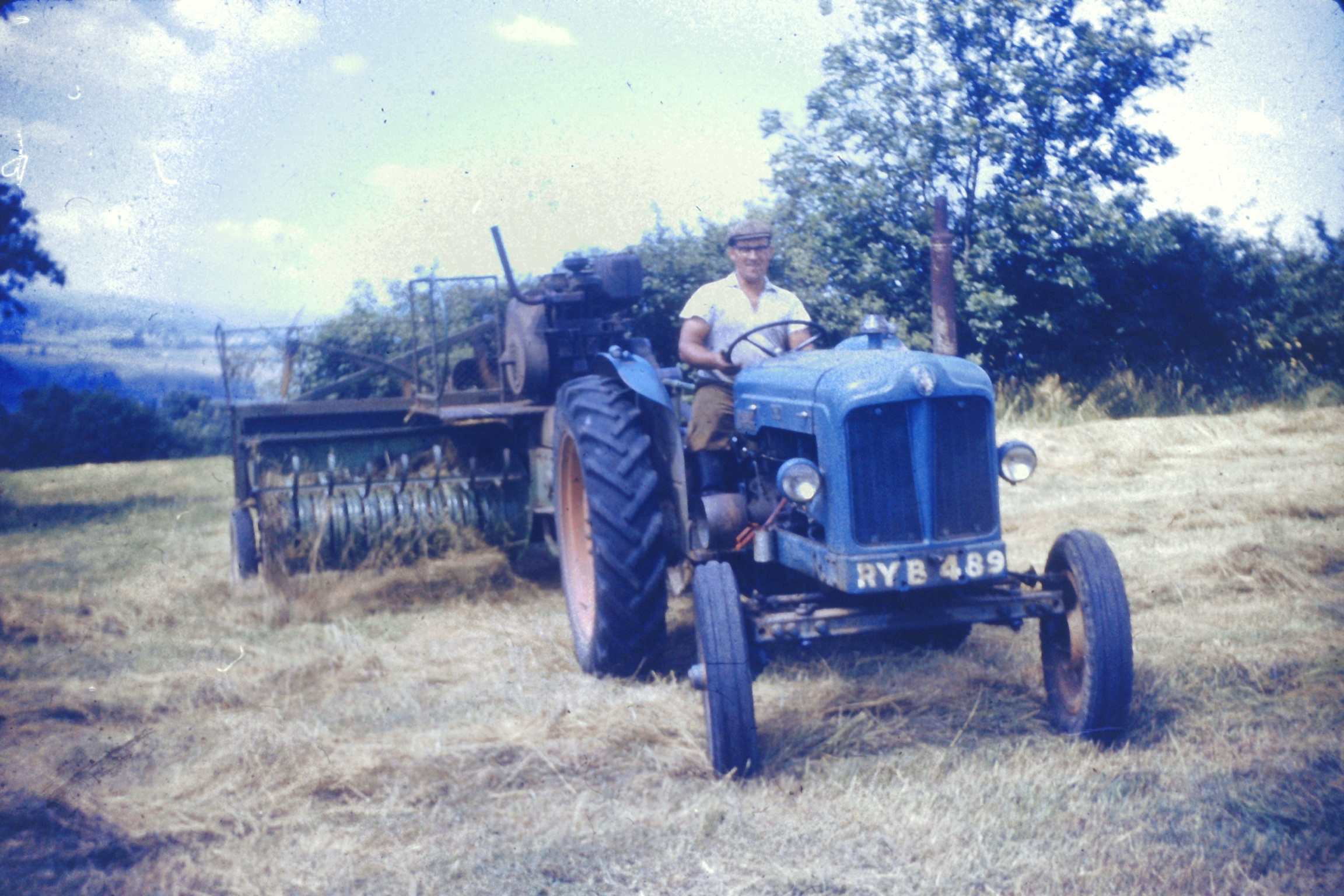
Albert Backholer working on Kelston Roundhill in 1959
The ashes of Albert Backholer were scattered on Kelston Roundhill on Sept 26th. Albert, his brothers John and Denis and his father all worked on the farm with Andrew Dinham, who said Albert’s passing was the end of an era. This photo of Albert in 1959 was sent in by his son Steve.
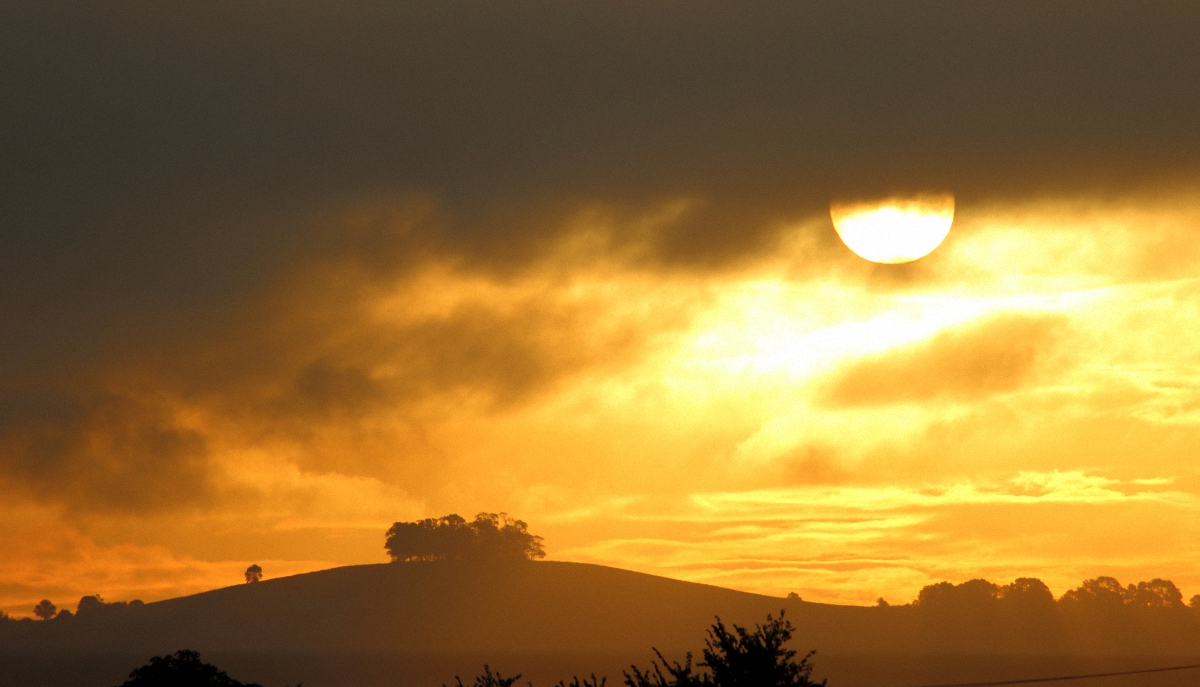
Morning everyone. Another picture to light up your day from Matt Prosser.
Thursday 18th, the day the Scots voted on independence, saw a huge storm in the south west. This long-exposure shot with Kelston clump in the distant horizon was taken by Matt Prosser in Keynsham:
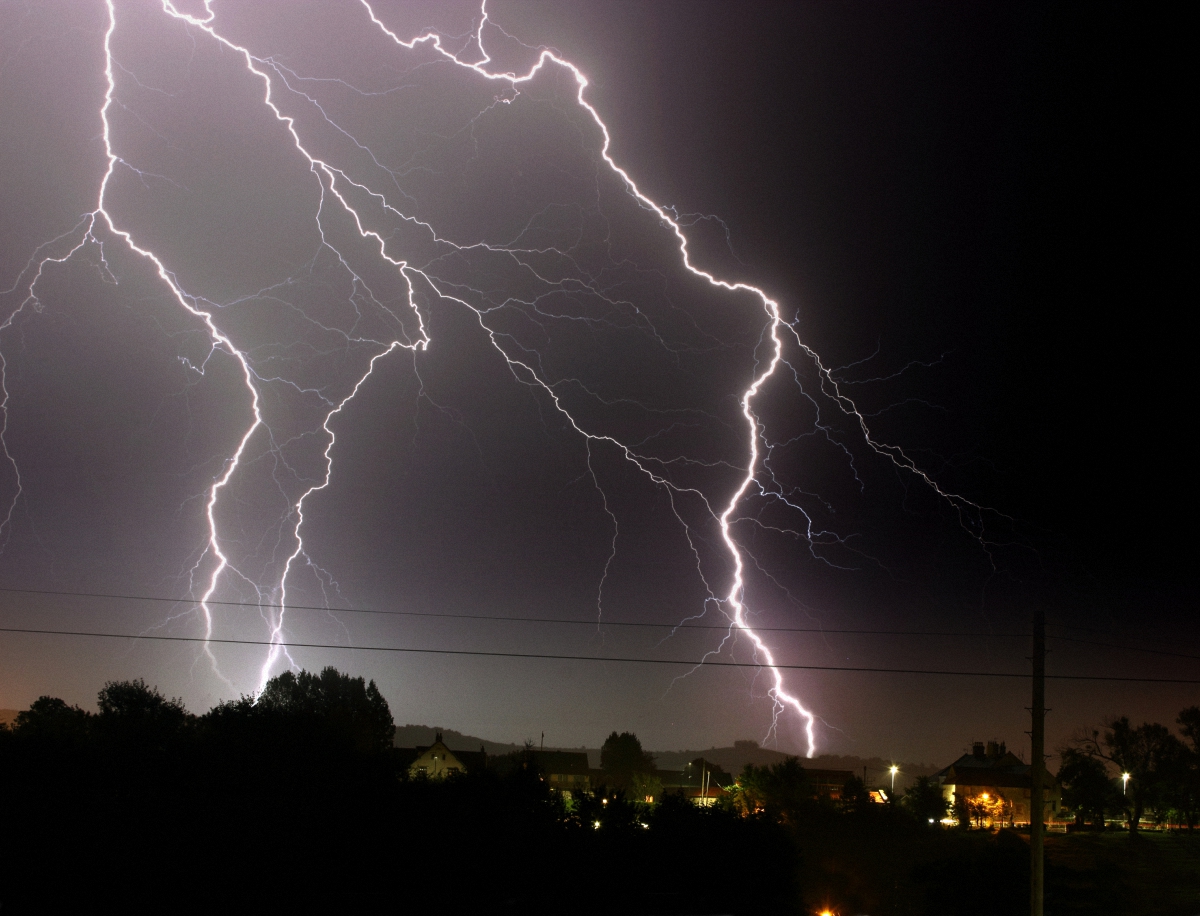
Winners of the Clump photo competition were celebrated on 16 August at a picnic held in two Army tents.
Overall winner, for a whole season’s series of epic pictures (among many favourites we chose the clump under a highly significant May full moon) had to be Matt Prosser. Matt wins a Bath Soft Cheese, presented by Hugh Padfield, and a jar of Kelston Roundhill honey prepared by Dr Clive Smith. Another award of single-estate Rodden Apple Juice from Dorset went to Graham Padfield for his picture of the barn in the setting sun. Finally BonnieMarie (from whom we think there is more to come) gets an award of a bottle of cider (contributed by Matt) for her rainbow on the clump (is it beaming energy up? or down?).
Many thanks to all who came, judges – especially Paul Clarke for his insightful comments – contributors of photos and of prizes. Main aim was to ensure that no-one went home with the prize they’d brought in the first place – successfully achieved we think.
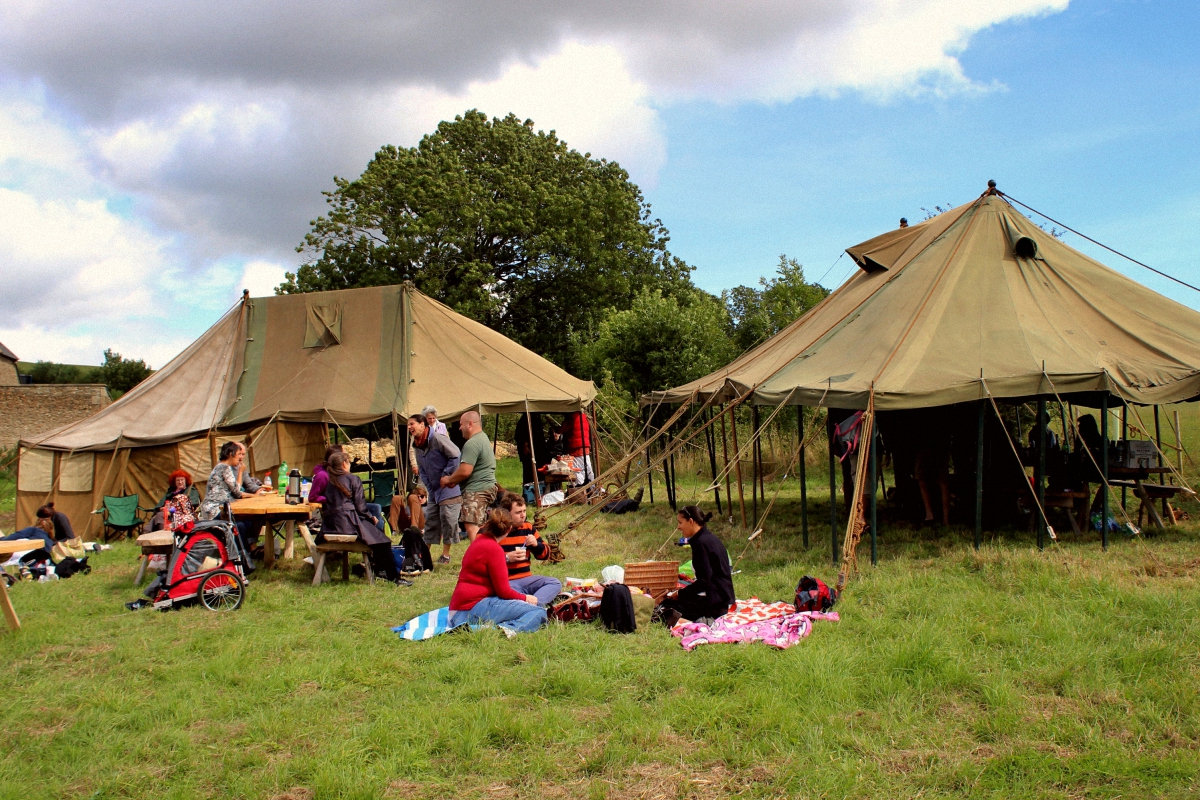
Kelston picnic photo; tents and table supplied by Ed Strutt
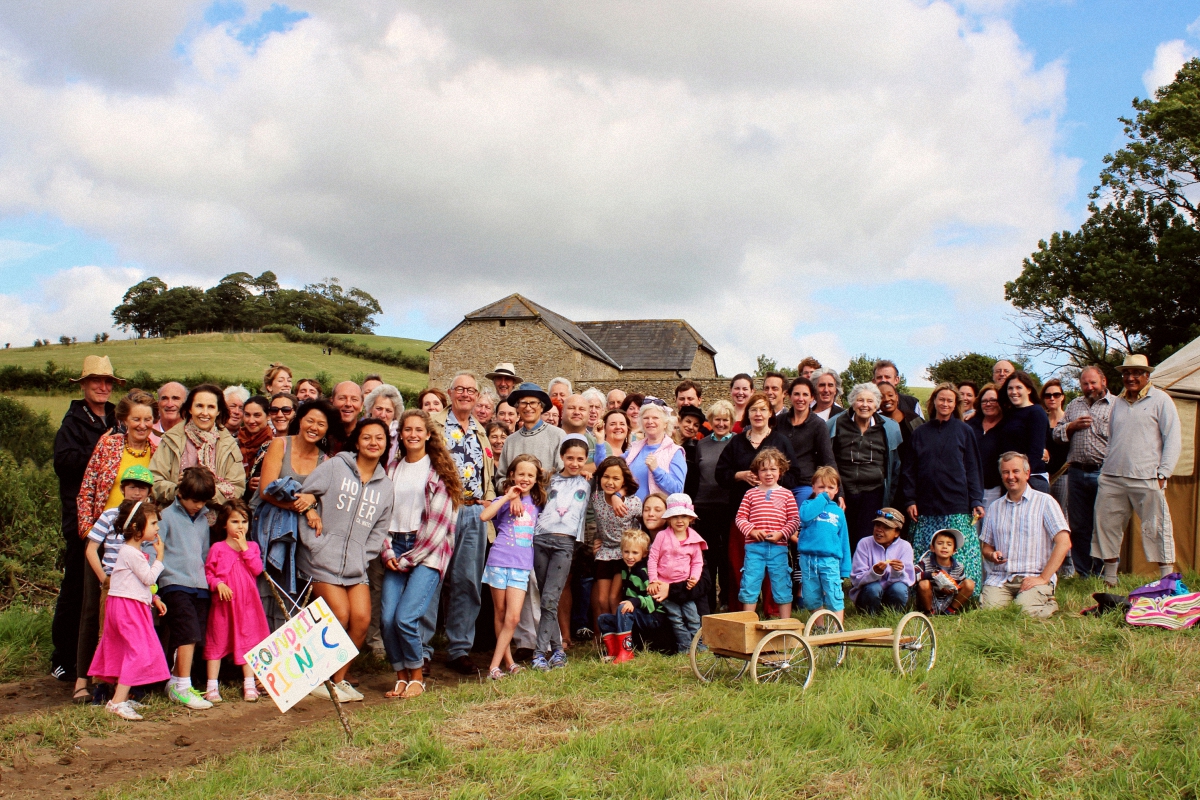
Kelston picnic group photo by Matt Prosser.
For next year’s August picnic we plan an “any media” competition for expressing the spirit of the place. Also – inspired by Theo – soapbox races. Ideal occasion for that with a long, steep bumpy track and at least half a dozen qualified doctors and nurses in attendance.
 | Anonymous on Welcome to Kelston Roundhill!… |
 | Clare Heath on Supermoon pics by Gregg W… |
| Anonymous on Childhood recollection of Kels… |
| Anonymous on Whisper Our Stories Back: poem… |